One of the most common conditions we see in the practice is anxiety. It is thought that at any one time 1 in 20 people suffer from anxiety. Undoubtedly, the pandemic, bringing with it uncertainty, has exacerbated the problem.
Many people suffer from anxiety occasionally. Often a moderate amount of anxiety can be helpful if it drives high performance. However, anxiety becomes a problem when it is frequent and impairs our performance, sleep and relationships.
Anxiety not only causes people to feel fearful and tense. It can also cause physical symptoms including:
Tremor
Palpitations
Nausea
Pins and needles
Tight chest
Fatigue
Diarrhoea
Bloating
Stomach cramps
Muscle aches
Sweating
Dry mouth
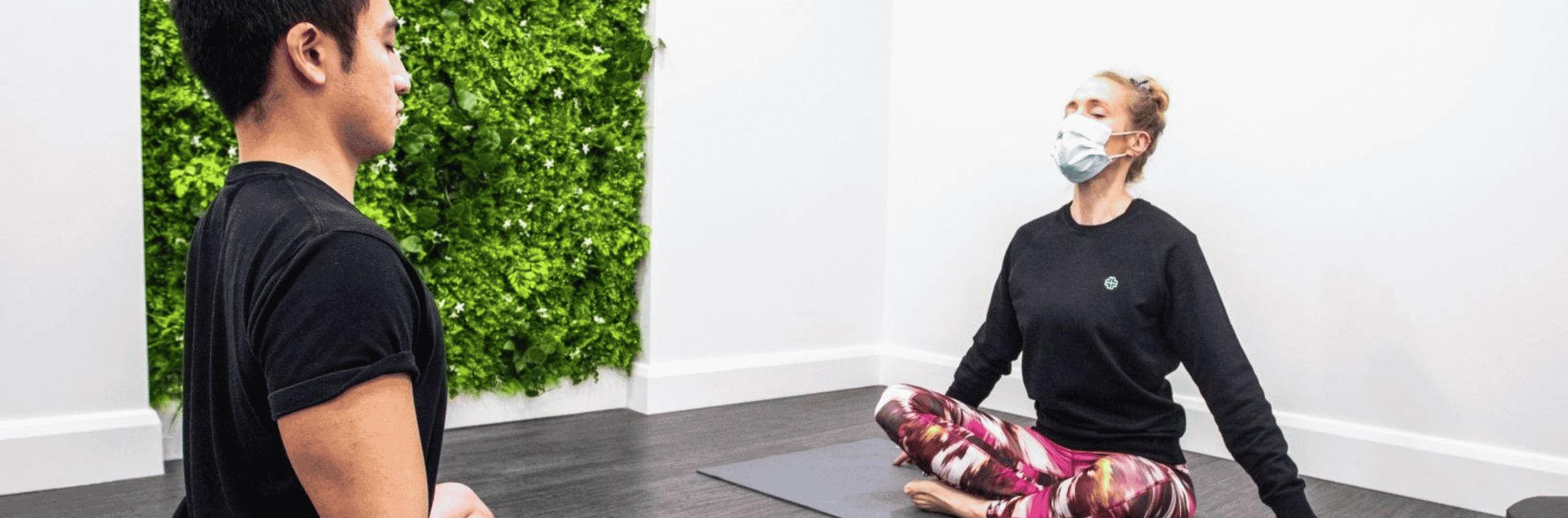
One powerful technique to get control of anxiety is through the breath. The physical symptoms of anxiety occur because of activation of the sympathetic nervous system. This is the fight or flight part of the nervous system. It is helpful if we need to escape a dangerous situation. Less so if it is activated by a Zoom meeting. We can use our breath to quieten the sympathetic nervous system and activate the parasympathetic nervous system. The parasympathetic nervous system is the rest and digest nervous system.
There have been several studies that have suggested that deep, intentional, diaphragmatic breathing is beneficial in reducing stress and anxiety. A particularly easy to master technique that I find very effective is Box Breathing. This technique was popularised by former US NavySEAL Mark Devine. He used the technique to help him finish as “Honour Man” in his SEAL class. He now mentors SEAL candidates and as part of his mentoring teaches the candidates Box Breathing.
The technique is called Box Breathing due to its equal four components. To try box breathing for yourself:
Exhale until you have totally emptied your lungs. Once they are fully emptied, hold your breath for 4 seconds.
At the end of the breath hold, inhale through your nose deep into your belly for 4 seconds.
Next, hold your breath for 4 seconds.
Now exhale for four seconds emptying your lungs fully.
Start by doing this cycle for a couple of minutes per day. Gradually increase the time you spend box breathing to 10-20 minutes per day. As your technique improves you can increase the length of the count.
Some tips to help optimise your technique:
Ideally, find a quiet place to practice
Try to consciously relax your muscles before you start breathing.
As you breathe in, consciously and gently fill your abdomen with your breath. But don’t force it.
Placing a hand on your abdomen can help.
Let us know if you find the technique helpful. If you’re struggling with anxiety then please don’t hesitate to get in touch.
Dr Hugh Coyne is a GP and co-founder of Coyne Medical, a private preventive health clinic at 660 Fulham Road, London. He trained at Imperial College London and has been in practice for over twenty years, with a particular focus on cardiovascular risk, metabolic health, and exercise medicine. After qualifying as a GP he went on to train in sport and exercise medicine, bringing a distinctly practical approach to prevention and long-term health.
British Association of Sports and Exercise Medicine · European Atherosclerosis Society · Independent Doctors Federation
As seen in The Independent, The Daily Mail and Tatler
For educational purposes. This article is written by a practising GP and is intended to inform, not replace a consultation with your own doctor. It does not constitute medical advice. A note on clinical guidelines: Coyne Medical is an independent private clinic. Our approach is guided by the best available evidence, tailored to each individual. This may go beyond standard NHS or NICE guidance, which is designed for population-level care and weighted by resource constraints.
“Diets, like clothes, should be tailored to you.” Joan Rivers
According to Maimonides, a Philosopher born in Córdoba in what is now modern day Spain, “No disease that can be prevented by diet should be treated with any other means”. Although he lived almost a thousand years ago, there is more than a grain of truth in this statement. In her excellent TEDX talk, Dr Sarah Hallberg, makes a compelling argument that this is the case with Type 2 Diabetes. As the Medical Director of the Medically Supervised Weight Loss Program at IU Health Arnett, she is in a good position to know.
Now for the science bit…
Unfortunately, a significant problem with any research into preventing disease is that it is inherently difficult to do. There are a number of reasons for this. Firstly, confounding factors play a big role. For example, a person who does one healthy behaviour – such as doing regular exercise – is more likely to eat a healthier diet. Researchers try to get around this by matching as closely as possible each group of participants in a study. However, it’s difficult to mitigate for everything. Secondly, it is hard to do dietary studies over a long period of time. Some people will drop out; some will get bored of the diet; some will make stuff up in their food diaries to keep the researcher happy. The latter is known as self-reporting bias. Thirdly, there is little money invested in finding out which broad diet might be the healthiest and good studies require lots of resources – and therefore lots of money. Many studies on diets are also prone to recall bias. This occurs with retrospective studies where two groups, one with a disease and one without, are asked to recall whether they ate lots of a certain food, say, cola bottle sweets. The researchers are hoping that those with the disease will say “Yeah, I ate loads of cola bottle sweets.” Then just before they publish their research paper they can hold a press conference and say “Cola bottle sweets cause disease X!”
Recently, an article in the New England Journal of Medicine on the Mediterranean Diet gained a lot of media attention. For a number of reasons, this diet is worth close examination. The purpose of this study was primarily to test how good the Mediterranean Diet was in a head-to-head (also referred to as a randomised control trial) against a low fat diet in preventing heart disease, strokes, and deaths from all cardiovascular diseases (CVD) in otherwise healthy people. This is what is known as a primary prevention study. In contrast, a secondary prevention study would look at people who already had heart disease. The researchers also wanted to test whether two variations of the Mediterranean diet had any impact on health outcomes. One variation placed more importance on olive oil and the other placed more emphasis on nuts. So, these researchers were testing out Maimonides’ hypothesis – that a Mediterranean Diet can prevent heart disease and ultimately prevent the need for treatment by means other than diet.
Who was in this study?
One of the aspects that makes this study so interesting is the group of people the researches included. Although none of the participants had CVD when the study started, all of them had medical conditions or lifestyle behaviours that put them at high risk of CVD. The male participants were aged between 55-80 and the women between 60-80. This is an important point. If you are not over 55 and at high risk of CVD then the results are considerably less applicable to you. The researches likely chose patients who were at high risk of CVD for two reasons. Firstly, it is more likely that there will be a beneficial effect in people at higher risk. If they were doing this study in healthy people, they would have needed to enrol far more people to see any effect. Secondly, the people in this study – and in the population in general – really need an effective dietary intervention to prevent CVD.
A further important point that makes this study impressive is that as all the participants were unhealthy to begin with. Both the Mediterranean Diet and low fat diet were likely to be an improvement on what they were already eating. You might be thinking why, if the researchers want to get impressive results, did they not have one group of participants on their usual diet? This would have introduced what is known as performance bias. At the beginning and throughout the study, participants received coaching from dieticians. Participants also had assessments to check their adherence to the diet. Keeping people on their standard fare diet would have meant that they’d have received less attention than the other participants. Thus, they would have been at even more of a disadvantage. One source of performance bias that was present in the study was that the control group on the low fat diet received less coaching than the two Mediterranean Diet groups.
As I mentioned earlier, the goal of this study was to see the effect of a dietary intervention on an amalgamation of the number heart attacks, strokes, and deaths from all cardiovascular diseases. This is what is known as a composite end point. This study was geared from the outset to establish the effect of diet on this composite.
What was in the diet?
One of the attractive aspects of the Mediterranean diet is – in my opinion – its simplicity. The dietary recommendations for the participants in the study were:
Mediterranean Diet
Extra-virgin olive oil, greater than 4 tablespoons per day
Tree nuts and peanuts, greater than 3 servings per week
Fresh fruits, greater than 3 servings per day
Vegetables, greater than 2 servings per day
Fish, especially fatty fish such as tuna, salmon and mackerel, greater than 3 servings per week
Legumes (bean, peas and lentils), greater than 3 servings per week
Sofrito (diced carrots, celery, onions and garlic fried gently in extra-virgin olive oil) which forms the basis of many sauces in the Mediterranean, greater than 2 servings per week
White meat rather than red meat
Wine – yes, wine – with meals, greater than or equal to 7 glasses per week. This was optional for what the researchers called “habitual drinkers.”
Foods that were discouraged included sweet fizzy drinks, commercial bakery goods, sweets and pastries, fat spreads and red and processed meats.
The low fat diet group were encouraged to eat:
Low fat dairy products
Breads, potatoes, pasta, and rice
Vegetables
Fresh fruit
Lean fish and seafood
So who wins in the battle of Mediterranean vs Low Fat?
For the composite end point I mentioned above, the Mediterranean diet resulted in a relative risk reduction of having either one of heart disease, strokes, and deaths from all cardiovascular diseases of 30%. A more useful way of looking at the data is numbers needed to treat. This tells us how many patients I would need to treat to prevent one person from getting one of the diseases in the composite end point. Crunching the numbers shows that, for the Mediterranean nut group, I would need to treat between 46-53 people to prevent one having heart disease, stroke, or death from any CVD; for the Mediterranean olive oil group, it is 56-232.
It is worth noting that in the subgroups that made up the composite, the two Mediterranean diets only showed a statistically significant benefit in reducing the number of strokes. However, remember the study was only powered to deliver a statistically significant result for the composite end point.
As mentioned early, dietary trials are difficult to do well. This trial is no different. The reason it gained press attention is that it was retracted and then republished. There were several reasons for the retraction. These included that some members of the same family were in the study but not randomised and that some people in the low-fat group ate a Mediterranean diet. After correcting for their errors, the researchers ran the analysis again and came to the same conclusion.
Overall, the Mediterranean diet certainly shows some benefit in preventing CVD for people who are at risk. This study is certainly an important one. However, it is one of several that confirm the benefits of a Mediterranean diet. So if this diet appeals to you and is aligned with your dietary beliefs I think it is the optimal diet for health. A diet needs to align with your beliefs for you to stick with it. Hence, diets should be, to an extent, personalised. Diet is, though, only part of the picture. It is likely that the reason for longevity in so many Mediterranean communities is a composite. In addition to diet, daily exercise, fasting, sense of community and socialisation, spirituality, sunshine and clean air all contribute.
Dr Hugh Coyne is a GP and co-founder of Coyne Medical, a private preventive health clinic at 660 Fulham Road, London. He trained at Imperial College London and has been in practice for over twenty years, with a particular focus on cardiovascular risk, metabolic health, and exercise medicine. After qualifying as a GP he went on to train in sport and exercise medicine, bringing a distinctly practical approach to prevention and long-term health.
British Association of Sports and Exercise Medicine · European Atherosclerosis Society · Independent Doctors Federation
As seen in The Independent, The Daily Mail and Tatler
For educational purposes. This article is written by a practising GP and is intended to inform, not replace a consultation with your own doctor. It does not constitute medical advice. A note on clinical guidelines: Coyne Medical is an independent private clinic. Our approach is guided by the best available evidence, tailored to each individual. This may go beyond standard NHS or NICE guidance, which is designed for population-level care and weighted by resource constraints.

“Shall daddy put on his tights?” my daughter asked earnestly whilst holding a pair of elasticated fluorescent green hosiery. Fortuitously there was no one else around to witness my unusual taste in undergarments. I had been given these to try when I was helping out as a doctor at a triathlon. As they were free and offered the potential chance both to reduce the post-cycling pain in my muscles, as well as satisfying a previously unknown fetish for snot coloured underclothing, I gleefully accepted them.
I was a little dubious as to whether they were of any actual benefit. The studies I had previously looked into about compression garments had come up with conflicting results. The idea behind these absurd looking garments is to reduce exercise-induced muscle damage (EIMD). This is the soreness and reduced function of muscles that anybody who exercises will be familiar with. This discomfort can persist for days. Hence, there is an understandable desire to reduce EIMD as much as possible.
How do they work?
Nobody is quite sure how compression garments might reduce EIMD. Presently, it is thought that the external pressure from the compression garment reduces the space available for swelling within the muscle. It is also thought that they may be of benefit by enhancing the clearance of waste products from muscles after exercise.
Many of the previous studies had each looked at the use of compression tights in different groups of people, performing different sports and applied at different times. In these situations where there have been lots of studies all showing slightly different results. A type of scientific study called meta-analysis can be used to pool the results of all the decent trials to give an overall picture of the effect of a particular treatment. Helpfully for us, the British Journal of Sports Medicine published a meta-analysis in 2013 looking at how I should be answering my daughter’s question. The researchers examined the results of 12 studies in total. The meta-analysis found that compression garments were useful for reducing the perception of delayed onset muscle soreness (DOMS). Perhaps even more valuable it that they found compression garments also resulted in more a more rapid return of muscle function.
So daddy should wear tights, during or after exercise!
Dr Hugh Coyne is a GP and co-founder of Coyne Medical, a private preventive health clinic at 660 Fulham Road, London. He trained at Imperial College London and has been in practice for over twenty years, with a particular focus on cardiovascular risk, metabolic health, and exercise medicine. After qualifying as a GP he went on to train in sport and exercise medicine, bringing a distinctly practical approach to prevention and long-term health.
British Association of Sports and Exercise Medicine · European Atherosclerosis Society · Independent Doctors Federation
As seen in The Independent, The Daily Mail and Tatler
For educational purposes. This article is written by a practising GP and is intended to inform, not replace a consultation with your own doctor. It does not constitute medical advice. A note on clinical guidelines: Coyne Medical is an independent private clinic. Our approach is guided by the best available evidence, tailored to each individual. This may go beyond standard NHS or NICE guidance, which is designed for population-level care and weighted by resource constraints.

Many of our patients want to get the very best from their bodies. To be able to maximise your training you need to maximise your recovery from exercise. Active recovery optimises training gains. So what are the best ways to recover from exercise?
Stretching
Stretching has several benefits after exercise. It can help increase both muscle length and range of motion. It may align collagen fibres which results in pain-relieving benefits. It also can help improve our posture. Of course, it also reduces muscle tension and alleviates stress.
All stretching modalities can improve range of motion. PNF (Proprioceptive Neuromuscular Facilitation) is the best form of stretching to increase range of motion. This type of stretching works by stretching and contracting the muscles. A few examples of this type of stretching includes:
· The Hold-relax technique – Stretch the muscle without moving, hold and then relax.
· The Contract-relax technique – Stretching the muscle whilst movement or resistance is added
· Hold-relax-contract technique – Stretch the muscle without moving, hold and then pushing deeper into the stretch.
Light Exercise
Gentle exercise works (yes, more exercise!) best when combined with stretching. This might include walking or very gentle spinning the legs on the bike. Gentle exercise helps your body cool down and calms the nervous system. It has been found to improve sleep after exercise and reduce soreness. But remember, don’t overdo it. You do not want to deplete energy levels or to increase muscle damage. Simple games can be helpful to boost psychological recovery. For this, playing with your kids provides great recovery.
Myofascial release
Myofascial release is a soft tissue therapy. It is done using a foam roller. It works by something called autogenic inhibition. This reduces the excited state of the stretched muscle and activates the opposing muscle. It can help increase the range of motion of joints and reduce muscle pain. To perform myofascial release roll your muscles on your foam roller. When you hit a tender spot, maintain pressure on that area for 30-60 seconds.
Hot or Cold
Cold and hot therapies work by decreasing the “thermal load” of the muscle and hence improve performance. The combination of hot and cold is often used at a ratio of 3 or 4:1. Both hot and cold and heat can be effective for reduces muscle damage after exercise. Cold is superior to heat in reducing muscle pain after exercise. Whole-body cryotherapy has been found to reduce muscle pain after exercise and improve recovery from exercise.
Compression
Compression tights may have some limited benefits on performance and physiology of muscles. They also seem to help with reducing muscle swelling and soreness. The main effect of compression tights appears to be psychological but this beneficial effect should not be underestimated.
Nutrition
Nutrition can have a profound impact on our recovery from exercise. In endurance exercise, optimal ingestion of macronutrients following a workout to boost recovery is 30-60 minutes post-exercise, 7-10g/kg of carbohydrate and 1.2-1.8g/kg of protein. The carbohydrate helps restore glycogen levels in the muscles. The protein helps with protein production in the fatigued muscles. Don’t forget re-hydration as part of your nutritional strategy after exercise. Checking your weight pre- and post-exercise can be helpful for calculating how much you need to drink to re-hydrate.
Psychology
Relaxing the mind is as important as relaxing the body. Music, meditation and breathing exercises have all been found to benefit recovery. These techniques also have great benefit in reducing stress.
There are multiple avenues by which we can optimise muscle recovery post-exercise. A strong balance between training and recovery will accelerate your athletic progression. All of these techniques also provide great stress relief which makes them a double win.
Dr Hugh Coyne is a GP and co-founder of Coyne Medical, a private preventive health clinic at 660 Fulham Road, London. He trained at Imperial College London and has been in practice for over twenty years, with a particular focus on cardiovascular risk, metabolic health, and exercise medicine. After qualifying as a GP he went on to train in sport and exercise medicine, bringing a distinctly practical approach to prevention and long-term health.
British Association of Sports and Exercise Medicine · European Atherosclerosis Society · Independent Doctors Federation
As seen in The Independent, The Daily Mail and Tatler
For educational purposes. This article is written by a practising GP and is intended to inform, not replace a consultation with your own doctor. It does not constitute medical advice. A note on clinical guidelines: Coyne Medical is an independent private clinic. Our approach is guided by the best available evidence, tailored to each individual. This may go beyond standard NHS or NICE guidance, which is designed for population-level care and weighted by resource constraints.

It is that time of year, when the weather is less kind and it starts to affect your skin. With the cold wind, wet outdoors and heating indoors, skin tends to get very dry and irritated. Here are a few simple things we need to remember to keep our skin happy throughout these colder months.
1.Try to switch to soap substitutes during these months, for both your face and body. For your face this means avoiding gel cleansers and opting for cream based cleansers. Your local pharmacist can assist you in choosing an array of soap substitutes to use either in the bath or shower.
2. Although it is tempting to have a very hot bath or shower when it is cold outside, it is better for your skin to have less contact with water and instead have a shorter warm shower. Try not to rub yourself dry vigorously, but pat yourself dry and apply a fragrance free moisturiser or emollient immediately after. This will help lock in the moisture.
Similarly, if you are washing your hands frequently, try to apply an emollient after each wash if convenient. Choosing an emollient is based on how dry your skin is and what you feel comfortable using. Cream or gel based emollients go on without leaving a greasy feeling, and although they are less moisturising they are fine for regular use. If your skin is very dry it is probably best to opt for an ointment which is greasier, but will work more effectively and quickly to sooth irritation. You could consider using a greasier emollient at night and a less greasy one in the day.
3.Exposed skin is vulnerable and more likely to dry out and become irritated, so if you can – cover it up! This means wearing gloves, hats and scarves in addition to your other warm winter gear. For some people direct contact with wool can cause irritation, so it is sensible to layer up and wear comfortable breathable materials under these.
4.Although it may not feel like you see the sun much at this time of the year, it is also advisable to use sunscreen in winter if you are going to be outside – even if you are not skiing on a sunny mountain slope.
5.It is also important to stay hydrated and maintain a healthy balanced diet. Our eating habits tend to get worse during the colder months and we reach for things that we find comforting. Additionally, it is worth considering taking supplements during this time of the year, especially vitamin D (see our blog about this for further details).
If you are still struggling with dry irritated skin despite these measures, it may be worth coming in for a review to see if your skin condition is more serious and may need topical steroids. We at Coyne Medical are always looking to help with any questions you may have, therefore please get in contact with us to book an appointment today.
From when we are small children, we are told about the importance of exercise. Whether it be that we need to go outside and play during break time or that as we age, we need to do cardiovascular exercise to maintain heart health and that resistance training will help muscle tone.
While this is all shown to us as influencing a healthy lifestyle, information about the importance of recovery is not as readily talked about. With recovery possibly being almost as important as physical exercise (https://www.ncbi.nlm.nih.gov/pmc/articles/PMC5916096/ , Dr Hugh has provided us with some ways to capitalise on our rest days, and that yes, most of these can be done sitting on the couch in front of the TV!
Stretching
PNF (Proprioceptive Neuromuscular Facilitation) has been found to be best for increasing range of motion. This type of stretching activates both muscle structure and reflex by stretching and contracting the muscles. A mix of both static stretching (a classic static stretch would be bending forwards to touch your toes and holding that position for 20 seconds) and dynamic stretches, including PNF, and partner assisted stretching can benefit. A few examples of this type of stretching includes:
The Hold-Relax Technique – Stretching the muscle without moving, holding and then relaxing
The Contract-Relax Technique – Stretching the muscle while moving or resistance is added
Hold-Relax-Contract Technique – Stretching the muscle without moving, holding and then pushing into the stretch.
Light Exercise
Gentle exercise works (yes, more exercise!) best when combined with stretching. This might include walking or very gently spinning the legs on the bike. But be cautioned to not deplete energy levels or to increase muscle damage. Simple games can be helpful to boost psychological recovery and for this playing with your kids provides great recovery.
Myofascial release
Myofascial release works by something called autogenic inhibition which reduces the excited state of stretched muscle and activated opposing muscle. It can help increase range of motion of joints and reduce muscle pain. Therefore, even though that foam roller is horrendously painful, give it a shot and see the benefits!
Hot or Cold
Cold and hot therapies work by decreasing the “thermal load” of the muscle and hence improving performance. The combination of hot and cold is often used at a ratio of 3 or 4:1. More information on the benefits of both and whether one is better than the other can be found here, https://pubmed.ncbi.nlm.nih.gov/26502272/
Compression
Compression tights have some limited benefits on performance and physiology of muscles. However, the main effect to be seen is psychological from a strong placebo effect which can be extremely effective according to this study. (https://pubmed.ncbi.nlm.nih.gov/30310979/)
Nutrition
In endurance exercise, optimal ingestion of macronutrients following a workout to boost recovery is 30-60 minutes post-exercise, 7-10g/kg of carbohydrate and 1.2-1.8g/kg of protein. https://www.ncbi.nlm.nih.gov/pubmed/9127682/
Psychology
Relaxing the mind is just as important as relaxing the body. Music, biofeedback, meditation, and breathing exercises have all been found to benefit the mental aspect of recovery.
With there being multiple avenues in which we can optimise muscle recovery post exercise, it is important to remember that a strong balance between the two will ultimately further progression. This is a great point to keep in mind rather than relying on constant exercise or alternatively constant TV watching ‘recovery’ to optimise our amazing bodies!
Dr Hugh Coyne is a GP and co-founder of Coyne Medical, a private preventive health clinic at 660 Fulham Road, London. He trained at Imperial College London and has been in practice for over twenty years, with a particular focus on cardiovascular risk, metabolic health, and exercise medicine. After qualifying as a GP he went on to train in sport and exercise medicine, bringing a distinctly practical approach to prevention and long-term health.
British Association of Sports and Exercise Medicine · European Atherosclerosis Society · Independent Doctors Federation
As seen in The Independent, The Daily Mail and Tatler
For educational purposes. This article is written by a practising GP and is intended to inform, not replace a consultation with your own doctor. It does not constitute medical advice. A note on clinical guidelines: Coyne Medical is an independent private clinic. Our approach is guided by the best available evidence, tailored to each individual. This may go beyond standard NHS or NICE guidance, which is designed for population-level care and weighted by resource constraints.

Do you want to know how to trach your body? Using wearables and apps on your phone can be helpful to monitor the body’s response to stress or training throughout the day. Although blood and salivary tests are available and genuinely more accurate in measuring stress responses through cortisol levels, these are not practical on a daily basis. The information from apps and wearables can also provide an incredible source of data for your doctor during a GP Consultation or Health Screening.
Monitoring Blood Pressure
High blood pressure is the most important risk factor for deaths worldwide. It is the cause of more deaths than smoking. Over half of adults over 45 have high blood pressure. In the clinic blood pressure can be a little above the ideal. This is often the case when people come to the doctors’ surgery. We term this “white-coat hypertension.” A useful way around this is to monitor home blood pressure readings. This provides us with substantially more data to use.
When checking blood pressure ensure that you have been sitting quietly for 5-10 minutes.
Rest your arm on a table, desk or arm rest.
Ensure that the blood pressure cuff is applied snuggly to the upper arm at the approximate level of the heart.
Take the best of three readings.
Try to check the blood pressure every day at different times of day for 2 weeks.
Many, but not all people with high blood pressure benefit from reducing salt from their diet. It is particularly important to avoid processed foods and ready meals which often have a high salt content. Reducing the intake of refined sugar is also important in blood pressure reduction.
Many of our patients use the QardioArm device which syncs wirelessly with your smartphone and then you can email me the readings directly. Even better is the Aktiia device which can be worn continuously: https://aktiia.com/uk/
Monitoring Mood
A basic way to measure response to stress or training is to record self-perceived measures of mood sleep quality, stress and energy levels. The app iMood Journal (https://itunes.apple.com/us/app/imoodjournal/id517952128?mt=8) can be useful for this but in my opinion can be impractical at times.
Dr Lucy’s favourite wearable is the Fitbit Charge 3 which gives insight into daily activity, tracks heart rate and gives feedback on sleep quality all in one (https://www.fitbit.com/uk/charge3).
Monitoring Heart Rate
In addition to these parameters, we also know that heart rate variability, the beat to beat variation in heart-beat, can provide a direct indication of the body’s stress levels and activation of parasympathetic (rest and recovery) and sympathetic (flight and flight) nervous systems. Generally, the wider the variation in HRV the better and narrower HRV can be due to stress or under recovery. There are several ways to monitor this in which the optimum is on a continuous basis. A few of products that do this and give feedback on stress levels and sleep quality include:
Oura ring (this is probably the best): The Ōura ring senses body temperature pulse heartrate variability and activity. It can give insights into sleep quality and recovery. Remarkably, that this data is gathered with a reasonably stylish rain. https://ouraring.com/.
Whoop wristband: The Whoop wristband also get great feedback on resting heart rate body temperature pulse heartrate variability and activity. The manufacturers have also created an online community and podcast to help users optimize the experience. https://whoop.com/
Garmin vivosmart: the Garmin watch allows users to facilitate the GPS tracking that Garmin devices are famous for as well as giving estimates of VO2 max https://buy.garmin.com/en-GB/GB/p/571520
The idea of these devices is that they give you the requisite nudge to ensure that you take proactive measures to reduce stress and increase recovery on days when your heart rate variability is low and the feedback from the device suggests that stress levels are high.
Dr Hugh Coyne is a GP and co-founder of Coyne Medical, a private preventive health clinic at 660 Fulham Road, London. He trained at Imperial College London and has been in practice for over twenty years, with a particular focus on cardiovascular risk, metabolic health, and exercise medicine. After qualifying as a GP he went on to train in sport and exercise medicine, bringing a distinctly practical approach to prevention and long-term health.
British Association of Sports and Exercise Medicine · European Atherosclerosis Society · Independent Doctors Federation
As seen in The Independent, The Daily Mail and Tatler
For educational purposes. This article is written by a practising GP and is intended to inform, not replace a consultation with your own doctor. It does not constitute medical advice. A note on clinical guidelines: Coyne Medical is an independent private clinic. Our approach is guided by the best available evidence, tailored to each individual. This may go beyond standard NHS or NICE guidance, which is designed for population-level care and weighted by resource constraints.