

Tag: Sports Medicine

  • Understanding heatstroke

    Understanding heatstroke

    1. What exactly is heat stroke and what causes it – what is going on inside the body on a cellular level?

    Heat stroke is the worse end of a big spectrum of heat related conditions.

    Exertional heat stroke is the type that is associated with exercising in the heat, it is a very serious condition when our body can no longer control its temperature and it starts to sky rocket.

    Usually when we work out we have lots of great mechanisms for helping our body cool off. Aside from our fancy work out gear our body cleverly sends more blood flow to the skin to help our skin produce more sweat which helps our body stay cool. To get more blood flow to the skin we send less blood to our digestive system which is why lots of people can find it hard to digest foods after exercise. In extreme heat this though can cause problems with less water being absorbed in our gut and even the gut becoming leaky and allowing toxins to enter our blood stream.

    If we become dehydrated during exercise it gets worse as our heart struggles to pump enough to keep up our circulation and becomes strained. If we can’t get enough blood to our muscles, they can start to overheat too and produce harm toxins which can actually damage the muscle tissue itself.

    We really start to worry about people when the body temperature is above 40 degrees centigrade. This is because this is called the ‘thermal threshold’, above this temperature the membranes, or outer layer of our cells, can become damaged, this can cause enough harm to cause the death of cells. In the worst-case scenario, the combination of these events can lead to unconsciousness, coma, multiple organ failure and even death.

    2. What can trigger heat stroke?

    The biggest risk of heat stroke is when the temperature outdoors is above 28°C, in combination with doing some strenuous activity or high intensity exercise for an hour or more. So even an outdoors exercise class or a fast run could be a risky time.

    Definitely if you are not used to that exercise there is a bigger risk. So, the current brilliant weather is a great reason to enjoy being outdoors but not the perfect time to try out that boot camp class.

    If you have another complicating factor it can also be enough to get your body in trouble, even if you are super fit. Common things are having a virus or mild illness, being dehydrated before you start exercises, inappropriate clothing and being tired. Some medications such as anti-depressant medicines can also add to the risk.

    3. What are the symptoms of heat stroke? – from the most obvious to some which are perhaps a bit more surprising?

    Most of us have probably experienced mild symptoms such as feeling a headache and unwell after a long afternoon in the sun. These kind of exhaustion symptoms are probably a really good way our body tries to make sure we don’t keep exerting ourselves and put ourselves at risk of overheating even further

    Heatstroke though can progress really quickly, there is often a severe headache, feeling generally confused and restless. It might surprise people that the skin is often dry, they are no longer sweating which is part of the problem and they are usually quite red and dry skinned. Their pulse might be racing. If you measured your temperature it would usually be above 40 degrees centigrade. When symptoms have become this severe it is an emergency to cool that person, they can quickly deteriorate to becoming drowsy and then unconscious.

    4. What are the best forms of heat stroke prevention and management?

    As in most things prevention is much better than cure. So, try to make sure you are not putting yourself in a high-risk group. Keep well hydrated before exercise, if you are doing a long event such as a marathon it is important you keep hydrated but take care not to over drink. Pre-cooling by using cooling clothing, cold water immersion and taking cool drinks before exercise can help too.

    If you know you are not well or are just recovering from an illness, then it is sensible not to push yourself in hot conditions. Make sure you have clothing on which will allow your skin to sweat freely and keep cool. If you are concerned about any medication or illness you may have please check with your doctor before strenuous exercise. Stomach upsets and having had too much alcohol in the day before are common triggers.

    Anyone planning to take part in an event or exercise in hot conditions should plan to get their body used to this beforehand. Ideally this would be training in the same environment but if that’s not possible then a training in a hot room can help, it takes the body at least 7 days and up to 14 days to really get used to exercising in a hot climate. Start with 30 minutes at a time and build up to 100 minutes, your body will learn to cool itself better. Ideally this should be daily, but even every day or two will help. Heart rate monitors can help you check you are not pushing yourself too hard. Unfortunately, when it comes to getting used to exercising in heat we are not all equal, women are more at risk than men.

    Ice packs and cool flannels can help to reduce body temperature quickly, the back of the neck, underarms and groins are the best places for these. Plus using fans and cold-water sprays to help the body lose heat through the skin. Cool fluids and slushy ice drinks are useful too.

    If you or someone you are with is showing signs of heat stroke then it is important to get them to medical care quickly, this would usually be an Accident and Emergency department. Even young and fit people can deteriorate quite quickly. In hospital other techniques such as fluids via a drip and medicines can be used, as well as blood tests and checks to make sure that the person is not suffering any organ damage.

    British Society for Genetic Medicine  ·  European Atherosclerosis Society  · 
    Independent Doctors Federation

    As seen in BBC, The Guardian, Women’s Health, The Times and Tatler

    For educational purposes. This article is written by a practising GP and is intended to inform, not replace a consultation with your own doctor. It does not constitute medical advice. A note on clinical guidelines: Coyne Medical is an independent private clinic. Our approach is guided by the best available evidence, tailored to each individual. This may go beyond standard NHS or NICE guidance, which is designed for population-level care and weighted by resource constraints.


  • Preventing ACL injuries in Women and Girls

    Preventing ACL injuries in Women and Girls

    ACL injuries are common and can lead to a long time away from playing sport. Recovery can often take 9 months. Having had an ACL injury also increases the risk of having further knee problems down the line. 

    The ACL, or anterior cruciate ligament, is at the front of a pair of ligaments that form a cross. Its role is to prevent the thigh bone (Femur) from sliding too far forward over the shin bone (tibia).

    Why Women and Girls are More Likely to Suffer ACL Injuries

    Women are about 4 times more likely to rupture their ACL than men are. Most ACL tears in women are non-contact injuries that usually occur during an awkward twisting motion. Certain sports have a higher risk of ACL tear. Typically, sports that have rapid stopping or changes in direction, landing from a jump or cutting motions are the highest risk. This includes netball, basketball, football and volleyball. 

    There are several reasons that women and girls are more prone to suffering from ACL injury. Many of these factors, such as female hormones, wider hips and more lax knees cannot be altered. Thus, focusing on preventing ACL injuries has to focus on what we can change.

    Landing Differences

    Two big factors can be changed to help reduce the likelihood of ACL injuries in women and girls. The first is how females tend to land from a jump. Two landing patterns that are particularly risky are landing with stiff, straight legs or landing in a knock-kneed position. These risky landing techniques are more common in women than in men and greatly increase the force through the knees as well as the risk of ACL injury. 

    Hamstrung by Hamstrings

    The second factor that can be altered to reduce ACL injury is what is known as neuromuscular adaptation. This refers to the strength, explosivity, timing and coordination of muscular contraction. Having sufficient strength, as well as being able to engage the right muscle at the right time during movement is crucial for knee stability. The hamstrings are particularly important in knee stability, as like the ACL, they stop the shin bone from sliding too far forward. Females take longer than males to produce force in their hamstrings and contract them more slowly. 

    How To Land Well To Prevent ACL Injuries in Women and Girls

    To land well and reduce the risk of injury observe yourself jumping from a plyometric box or workout step in front of a mirror. Or, ideally, you could also have a partner observe you or film it on your phone. Start and finish the jump with the knees and hips bent. Make sure you keep your knees over and in line with your second toes as you land and that the knees don’t collapse inwards.  Try to land as softly as possible on the front half of the soles of your feet. 

    Strengthening To Prevent ACL Injuries in Women and Girls

    Strengthening hamstrings is really important for ACL prevention. A great exercise for this is Steamboats. Having strong glutes (bum muscles) is also important. They help stop the knees from knocking together. Lateral steps using a theraband and single-leg bridges can be great for this. Stabilising the trunk through core stability exercises such as plank can also help reduce the risk of leg injuries. 

    Plyometric drills such as tuck jumps and squat jumps can help with muscle explosivity and timing or muscle contraction. The core component of these exercises is the squat. it is a foundational move for athletic endeavours. Agility drills such as fast feet can also help improve power and speed while reducing injury risk. 

    If you master these tips, you’ll greatly reduce your risk of ACL injury.

    British Association of Sports and Exercise Medicine  ·  European Atherosclerosis Society  · 
    Independent Doctors Federation

    As seen in The Independent, The Daily Mail and Tatler

    For educational purposes. This article is written by a practising GP and is intended to inform, not replace a consultation with your own doctor. It does not constitute medical advice. A note on clinical guidelines: Coyne Medical is an independent private clinic. Our approach is guided by the best available evidence, tailored to each individual. This may go beyond standard NHS or NICE guidance, which is designed for population-level care and weighted by resource constraints.

  • Optimising Recovery From Exercise – Capitalise on your rest days

    Optimising Recovery From Exercise – Capitalise on your rest days

    From when we are small children, we are told about the importance of exercise. Whether it be that we need to go outside and play during break time or that as we age, we need to do cardiovascular exercise to maintain heart health and that resistance training will help muscle tone.

    While this is all shown to us as influencing a healthy lifestyle, information about the importance of recovery is not as readily talked about. With recovery possibly being almost as important as physical exercise (https://www.ncbi.nlm.nih.gov/pmc/articles/PMC5916096/ , Dr Hugh has provided us with some ways to capitalise on our rest days, and that yes, most of these can be done sitting on the couch in front of the TV!

    Stretching

    PNF (Proprioceptive Neuromuscular Facilitation) has been found to be best for increasing range of motion. This type of stretching activates both muscle structure and reflex by stretching and contracting the muscles. A mix of both static stretching (a classic static stretch would be bending forwards to touch your toes and holding that position for 20 seconds) and dynamic stretches, including PNF, and partner assisted stretching can benefit. A few examples of this type of stretching includes:

    The Hold-Relax Technique – Stretching the muscle without moving, holding and then relaxing

    The Contract-Relax Technique – Stretching the muscle while moving or resistance is added

    Hold-Relax-Contract Technique – Stretching the muscle without moving, holding and then pushing into the stretch.

    Light Exercise

    Gentle exercise works (yes, more exercise!) best when combined with stretching. This might include walking or very gently spinning the legs on the bike. But be cautioned to not deplete energy levels or to increase muscle damage. Simple games can be helpful to boost psychological recovery and for this playing with your kids provides great recovery.

    Myofascial release

    Myofascial release works by something called autogenic inhibition which reduces the excited state of stretched muscle and activated opposing muscle. It can help increase range of motion of joints and reduce muscle pain. Therefore, even though that foam roller is horrendously painful, give it a shot and see the benefits!

    Hot or Cold

    Cold and hot therapies work by decreasing the “thermal load” of the muscle and hence improving performance. The combination of hot and cold is often used at a ratio of 3 or 4:1. More information on the benefits of both and whether one is better than the other can be found here, https://pubmed.ncbi.nlm.nih.gov/26502272/

    Compression

    Compression tights have some limited benefits on performance and physiology of muscles. However, the main effect to be seen is psychological from a strong placebo effect which can be extremely effective according to this study. (https://pubmed.ncbi.nlm.nih.gov/30310979/)

    Nutrition

    In endurance exercise, optimal ingestion of macronutrients following a workout to boost recovery is 30-60 minutes post-exercise, 7-10g/kg of carbohydrate and 1.2-1.8g/kg of protein. https://www.ncbi.nlm.nih.gov/pubmed/9127682/

    Psychology

    Relaxing the mind is just as important as relaxing the body. Music, biofeedback, meditation, and breathing exercises have all been found to benefit the mental aspect of recovery.

    With there being multiple avenues in which we can optimise muscle recovery post exercise, it is important to remember that a strong balance between the two will ultimately further progression. This is a great point to keep in mind rather than relying on constant exercise or alternatively constant TV watching ‘recovery’ to optimise our amazing bodies!

    British Association of Sports and Exercise Medicine  ·  European Atherosclerosis Society  · 
    Independent Doctors Federation

    As seen in The Independent, The Daily Mail and Tatler

    For educational purposes. This article is written by a practising GP and is intended to inform, not replace a consultation with your own doctor. It does not constitute medical advice. A note on clinical guidelines: Coyne Medical is an independent private clinic. Our approach is guided by the best available evidence, tailored to each individual. This may go beyond standard NHS or NICE guidance, which is designed for population-level care and weighted by resource constraints.
  • Wearables and Apps-How to Track Your Body

    Wearables and Apps-How to Track Your Body

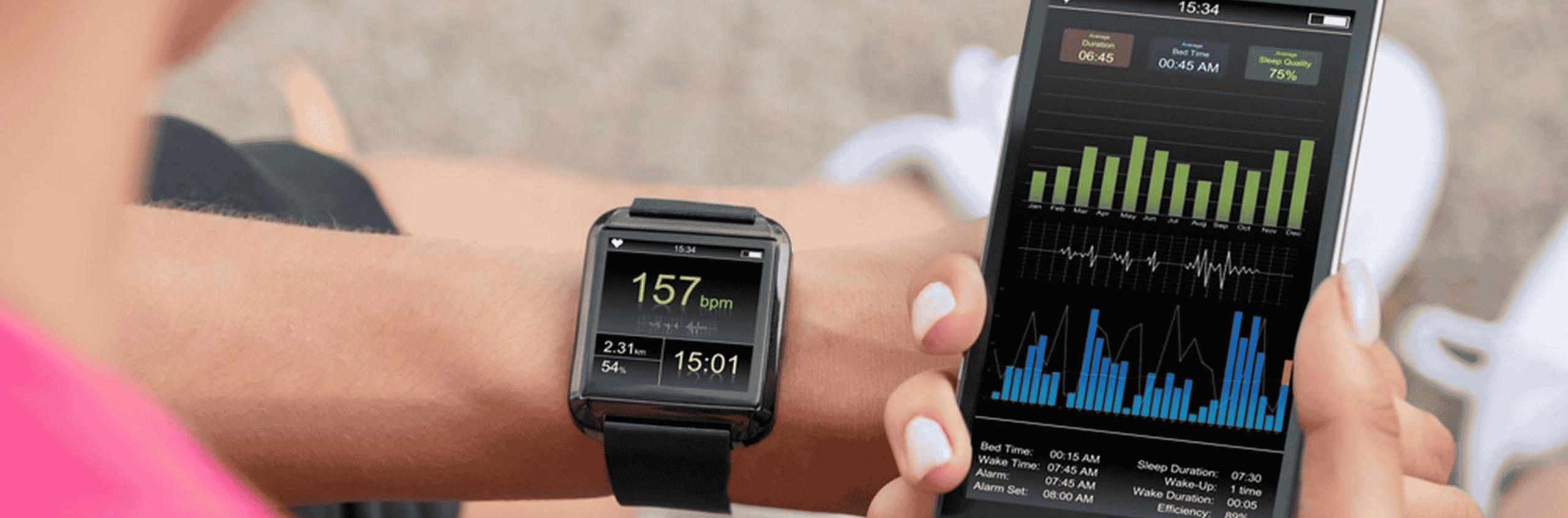
    Do you want to know how to trach your body? Using wearables and apps on your phone can be helpful to monitor the body’s response to stress or training throughout the day. Although blood and salivary tests are available and genuinely more accurate in measuring stress responses through cortisol levels, these are not practical on a daily basis. The information from apps and wearables can also provide an incredible source of data for your doctor during a GP Consultation or Health Screening.

    Monitoring Blood Pressure

    High blood pressure is the most important risk factor for deaths worldwide. It is the cause of more deaths than smoking. Over half of adults over 45 have high blood pressure. In the clinic blood pressure can be a little above the ideal. This is often the case when people come to the doctors’ surgery. We term this “white-coat hypertension.” A useful way around this is to monitor home blood pressure readings. This provides us with substantially more data to use. 

    • When checking blood pressure ensure that you have been sitting quietly for 5-10 minutes. 
    • Rest your arm on a table, desk or arm rest. 
    • Ensure that the blood pressure cuff is applied snuggly to the upper arm at the approximate level of the heart. 
    • Take the best of three readings. 
    • Try to check the blood pressure every day at different times of day for 2 weeks. 
    • Many, but not all people with high blood pressure benefit from reducing salt from their diet. It is particularly important to avoid processed foods and ready meals which often have a high salt content. Reducing the intake of refined sugar is also important in blood pressure reduction. 

    Here is a list of blood pressure monitors that have been validated for home use: http://bhsoc.org/bp-monitors/bp-monitors/for-home-use/

    Many of our patients use the QardioArm device which syncs wirelessly with your smartphone and then you can email me the readings directly. Even better is the Aktiia device which can be worn continuously: https://aktiia.com/uk/

    Monitoring Mood

    A basic way to measure response to stress or training is to record self-perceived measures of mood sleep quality, stress and energy levels. The app iMood Journal (https://itunes.apple.com/us/app/imoodjournal/id517952128?mt=8) can be useful for this but in my opinion can be impractical at times.

    Monitoring Sleep

    In addition to mood, sleep quality is another important measure and the app Sleep Cycle is useful for this (https://itunes.apple.com/au/app/sleep-cycle-alarm-clock/id320606217?mt=8).

    Dr Lucy’s favourite wearable is the Fitbit Charge 3 which gives insight into daily activity, tracks heart rate and gives feedback on sleep quality all in one (https://www.fitbit.com/uk/charge3).

    Monitoring Heart Rate

    In addition to these parameters, we also know that heart rate variability, the beat to beat variation in heart-beat, can provide a direct indication of the body’s stress levels and activation of parasympathetic (rest and recovery) and sympathetic (flight and flight) nervous systems. Generally, the wider the variation in HRV the better and narrower HRV can be due to stress or under recovery. There are several ways to monitor this in which the optimum is on a continuous basis. A few of products that do this and give feedback on stress levels and sleep quality include:

    Oura ring (this is probably the best): The Ōura ring senses body temperature pulse heartrate variability and activity. It can give insights into sleep quality and recovery. Remarkably, that this data is gathered with a reasonably stylish rain. https://ouraring.com/.

    Whoop wristband: The Whoop wristband also get great feedback on resting heart rate body temperature pulse heartrate variability and activity. The manufacturers have also created an online community and podcast to help users optimize the experience. https://whoop.com/

    Garmin vivosmart: the Garmin watch allows users to facilitate the GPS tracking that Garmin devices are famous for as well as giving estimates of VO2 max https://buy.garmin.com/en-GB/GB/p/571520

    The idea of these devices is that they give you the requisite nudge to ensure that you take proactive measures to reduce stress and increase recovery on days when your heart rate variability is low and the feedback from the device suggests that stress levels are high.

    British Association of Sports and Exercise Medicine  ·  European Atherosclerosis Society  · 
    Independent Doctors Federation

    As seen in The Independent, The Daily Mail and Tatler

    For educational purposes. This article is written by a practising GP and is intended to inform, not replace a consultation with your own doctor. It does not constitute medical advice. A note on clinical guidelines: Coyne Medical is an independent private clinic. Our approach is guided by the best available evidence, tailored to each individual. This may go beyond standard NHS or NICE guidance, which is designed for population-level care and weighted by resource constraints.