
What your mouth can tell you about your health
Most people think of oral health as something their dentist handles. Bleeding gums, cavities, the occasional check-up. What most people do not know is that the health of your mouth has a direct and well-evidenced connection to your heart, your immune system, and your metabolic health. What happens in your mouth does not stay there.
The bacteria that cause gum disease do not simply sit in your gums. They enter your bloodstream. They have been found inside the walls of arteries. They trigger inflammatory signals that affect your heart, your blood sugar, and your immune response. Research shows that treating gum disease reduces a key marker of systemic inflammation by an amount comparable to some dedicated lifestyle interventions. This is not a fringe idea. It is increasingly recognised as one of the most overlooked connections in medicine.
At Coyne Medical, we include an oral health screen as part of the Ultimate Health Screening for exactly this reason. This guide explains what the test looks at, what the results mean, and why your mouth is worth including in any serious health assessment.
What the oral health screen measures
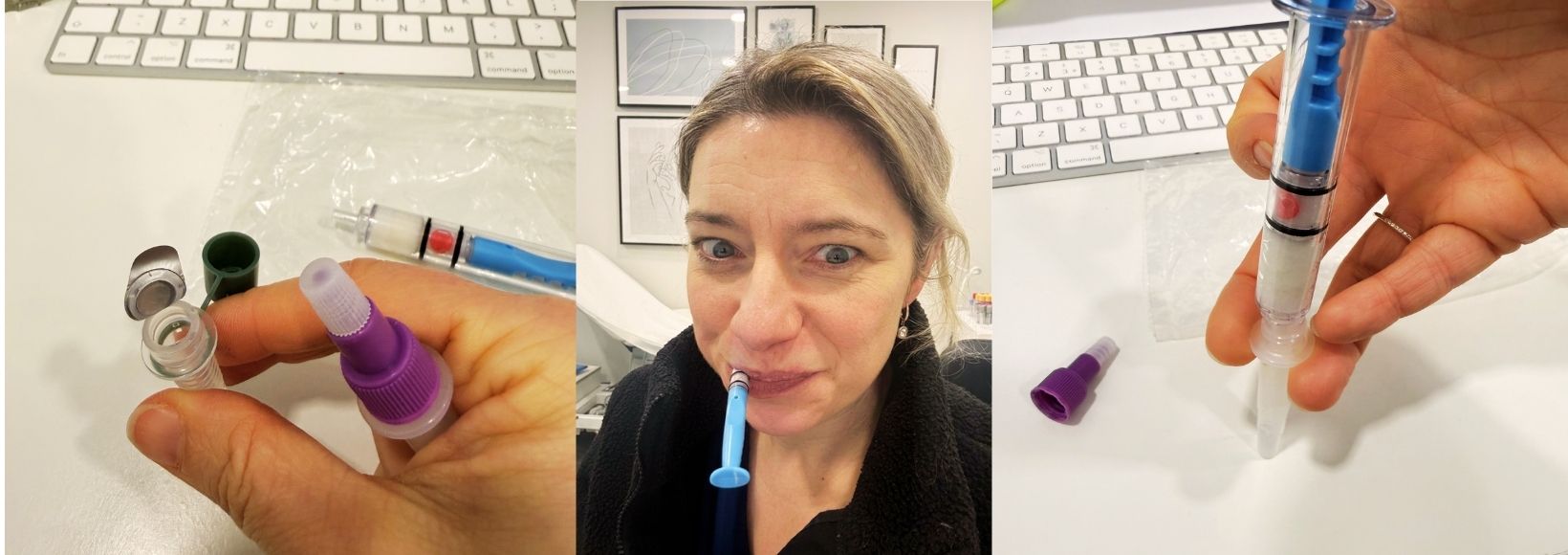
The test is simple. During your GP assessment, we use a small cotton swab to collect a saliva sample. That sample is then applied to a test card and analysed on the spot. No laboratory, no waiting weeks for results. The findings feed directly into your overall results consultation.
The sample is measured across six markers.
P. gingivalis is the main bacterium responsible for gum disease. It is also the organism most directly linked to cardiovascular and gut consequences of oral inflammation. Researchers have found it not just near arterial plaques but inside them. The test shows whether levels are within the good range, poor, or very poor.
MMP-8 is an enzyme your immune system releases when gum tissue is under attack. Raised levels indicate active inflammation in the gums, often before you have noticed any symptoms yourself.
Salivary pH measures how acidic your mouth is. A pH between 6.5 and 8.5 supports a healthy balance of bacteria. A more acidic environment lets harmful bacteria thrive and protective ones retreat.
Buffering capacity is your mouth’s ability to neutralise the acids that bacteria produce. When this is low, the risk of enamel erosion increases and the conditions for an imbalanced bacterial environment are in place.
Nitric oxide is a molecule that plays a role in keeping blood vessels healthy and blood pressure regulated. Part of it is produced through activity in the mouth, which makes salivary nitric oxide a useful window into cardiovascular and metabolic health.
Salivary proteins are part of your mouth’s first line of defence against infection and inflammation. Low levels suggest that defence is reduced.
All six results are reviewed by your Coyne Medical GP alongside your cardiovascular markers, metabolic blood results, and full clinical picture. That is what makes the findings meaningful rather than just numbers on a page.
Why oral health affects the rest of your body
Your heart
Gum disease increases the risk of coronary heart disease by roughly 25 to 35 percent. The bacteria responsible for gum disease can enter the bloodstream through inflamed gum tissue and travel to the arteries, where they contribute to the build-up of plaques. They also trigger the production of inflammatory molecules that drive that process further. These are the same inflammatory signals that cardiologists spend significant effort trying to reduce.
Studies have shown that treating gum disease lowers a widely used marker of inflammation in the body by a meaningful amount after six months of treatment. That is a real clinical effect from addressing something that needed treating anyway.
Your blood sugar
The relationship between gum disease and type 2 diabetes runs in both directions. High blood sugar creates an environment in which harmful oral bacteria thrive. And in turn, chronic inflammation from gum disease makes it harder for the body to regulate blood sugar effectively. Treating gum disease has been shown to improve blood sugar control in people with type 2 diabetes. The mouth is part of the metabolic picture.
Your immune system
Your mouth is home to over 700 species of bacteria, making it the second most diverse microbial environment in the body after the gut. When that balance tips toward a harmful mix, the effects do not stay local. You swallow around 1.5 litres of saliva every day, and whatever bacteria are living in your mouth travel with it. Harmful oral bacteria have been found in inflamed gut tissue. Chronic oral inflammation also primes immune cells in ways that can amplify inflammatory responses throughout the body.
Understanding your results
Each of the six markers is rated across a range from good to very poor, with reference values in the report. A result outside the optimal range is not a diagnosis. It is a signal worth understanding in the context of everything else your health screen has found.
Some patterns that commonly come up and what they tend to suggest:
Elevated P. gingivalis alongside raised inflammatory markers elsewhere in the blood results points toward gum disease as an active contributor to systemic inflammation. The starting point is almost always a dental review and professional periodontal assessment.
Low buffering capacity combined with a poor salivary pH often reflects frequent consumption of acidic foods or drinks, and can also indicate dehydration or mouth breathing, both of which carry broader health implications worth discussing.
Low nitric oxide, particularly alongside elevated blood pressure or cardiovascular risk markers, adds a useful piece to the cardiovascular picture. Increasing dietary nitrate through vegetables has good evidence in this context and is something your GP can discuss with you at the results consultation.
Low salivary proteins can reflect immune suppression, chronic stress, or nutritional factors. It is most useful when considered alongside the full screening picture rather than in isolation.
What happens next
Where all six markers are within normal ranges, no specific action is needed beyond maintaining good oral hygiene and seeing your dentist regularly.
Where results fall outside optimal ranges, your Coyne Medical GP will discuss the findings at your results consultation. Depending on what is found, this may include a referral to a dentist or periodontist for professional assessment, dietary changes targeting specific markers, further investigation of relevant blood markers, or a follow-up review at three to six months.
The oral health screen does not replace dental care. Its role is to make sure that meaningful signals in your mouth are not missed in the gap that tends to exist between medical and dental medicine
Frequently asked questions
Is the oral health screen a dental test? No. It is a health screen that uses saliva to look at markers connected to cardiovascular risk, inflammation, and metabolic health. It complements your dental care but does not replace it. All results are reviewed by a Coyne Medical GP, not a dentist.
Do I need to have gum disease for this to be relevant to me? No. Many people with elevated oral inflammatory markers have no symptoms at all. The test is most valuable as part of a comprehensive health screen precisely because it can identify signals before they become visible problems.
Why is this test included in the Ultimate Health Screening? Oral health is one of the most well-evidenced and most overlooked contributors to cardiovascular risk and systemic inflammation. Including it within a comprehensive screen allows the findings to be interpreted alongside cardiovascular, inflammatory, and metabolic data, which is where the clinical value lies.
What is P. gingivalis and why does it matter? It is the main bacterium responsible for gum disease, and the one most directly linked to effects beyond the mouth. It has been found inside arterial plaques and in inflamed gut tissue. Most people have never heard of it, but it is one of the more significant organisms in the body from a systemic health perspective.
Will my results be shared with my dentist? Not automatically. The report belongs to you, and many patients choose to share it with their dentist as a starting point for a conversation about their gum health. Your Coyne Medical GP can help you understand what to share and how.
Is a saliva test accurate enough to be clinically useful? The test measures specific biochemical markers directly from saliva and is designed for use in clinical settings. It does not replace a full laboratory periodontal analysis, but as a systemic risk indicator within a comprehensive health screen and interpreted by a GP alongside other clinical findings, it provides genuinely useful information.
A note from Dr Lucy Hooper
Medicine and dentistry are treated as separate disciplines, but the biology does not respect that division. Your gut begins in your mouth. Inflammatory signals from your gums enter your bloodstream. Bacteria from your oral environment travel to your arteries and your gut. Yet in most medical settings, the mouth is simply not examined.
We added the oral health screen to the Ultimate screening because we want to close that gap. Not to become dentists, but to make sure that when we are reviewing someone’s cardiovascular risk or their inflammatory markers, we are not ignoring something significant and treatable happening upstream. For some patients, what we find in their saliva will be the most actionable result in the whole screen.
Discover the Ultimate Health Screening
The oral health screen is one part of the Coyne Medical Ultimate Health Screening. It sits alongside whole body MRI, VO2 max testing, pharmacogenomics, a 55 gene inherited cancer risk panel, and a full advanced blood panel. Find out what is included and how to book.

👩⚕️ About the Author
Dr. Lucy Hooper is a private GP at Coyne Medical in London, specialising in family medicine, preventative care and screening. Passionate about patient-centered healthcare, she provides expert guidance on health screenings, and personalised wellness plans.
📍 Coyne Medical | Fulham, London SW6
📅 Book an appointment today to discuss your health needs!