
Tag: Sleep

  • 5 Sleep Tips for Children

    5 Sleep Tips for Children

    Back to school can often be a time when children find it tricky to settle back into their usual routine. Summer holidays often mean changes in location and bedtimes. New classes and school can give many kids a little anxiety and can mean sleep is restless. Just when you want them to be at their most rested and ready for the new school year. 

    1. Keeping timings the same everyday can help children get back into a routine faster. So though weekend lie ins are tempting it is better to have bedtime and getting up around the same time through the week. Especially if you’re struggling to get back to a routine. 
    2. Screen time is best avoided for at least an hour before bedtime. The blue light from devices can disrupt the natural production of melatonin in the body and make it harder to sleep. For some children it can also cause more bedwetting. Most kids have had a bit more screen time over the holidays it is a great time to draw up and restart house rules on screen time during the term. 
    3. Exercise is usually a great way to make sure children are physically tired and so ready to sleep. Try to avoid it too close to bedtime though. Hopefully we will have some more sunny mornings, a good morning walk or cycle in the sunlight helps to regulate our body clock and melatonin levels. 
    4. Try to avoid discussing worries or plans for the next day around bedtime. It’s better to talk through things earlier in the evening. If your child is struggling with worries at bedtime or lots of thoughts a journal can help, or we’ve found worry dolls useful for younger children. Older children can try an app with meditations or breathing exercises to help sleep. 
    5. Keep your child’s bedrooms cool, quiet and calm. Don’t be temped to overheat them as we get into Autumn, around 16-20 degrees is ideal. A calming quiet environment is best, so avoid too many toys or clutter, even toys can sometimes become scary for children in night time. If your child struggles in the dark, get a low nightlight to ensure they are not overstimulated by light. 

    Hopefully we will all be back in to swing of the school routine. If you or your child are struggling with sleep and things are getting better it is probably time to see your doctor and talk it through. 

    British Society for Genetic Medicine  ·  European Atherosclerosis Society  · 
    Independent Doctors Federation

    As seen in BBC, The Guardian, Women’s Health, The Times and Tatler

    For educational purposes. This article is written by a practising GP and is intended to inform, not replace a consultation with your own doctor. It does not constitute medical advice. A note on clinical guidelines: Coyne Medical is an independent private clinic. Our approach is guided by the best available evidence, tailored to each individual. This may go beyond standard NHS or NICE guidance, which is designed for population-level care and weighted by resource constraints.
  • How to best tackle jet lag – travel like a pro

    How to best tackle jet lag – travel like a pro

    Jet lag is a relatively recent ailment for humans to suffer. It is one of many conditions that has its origins in rapid technological advancement. Transcontinental travel via jet planes brought with them a touch of glamour and thrill of exploring the globe as well as a particularly annoying and pervasive fatigue.

    Jet lag can cause a whole host of undesirable effects including fatigue, apathy, insomnia, loss of appetite and bowel irregularities. So, what can be done about it?

    Your body can adapt to a new time zone by about one hour for every day you have been in a new time zone. Unfortunately, there is no ‘cure’ for jet lag. In conquering jet lag, the aim is to speed the process up enough for your body clock to keep up with a jet engine.

    Start as you mean to go on

    One on the most effective ways to combat jet lag is, in the days prior to travel, adjust your sleeping and waking schedule incrementally towards that of the new time zone. It is notable that physically fit individuals tend to have a less hard time adjusting to jet lag.

    Travel Like a Pro

    During the flight several factors will help reduce jet lag. Continue to adjust you sleep schedule such that you plan wake up on the plane at least 12 hours before your intended bed time. Blue blocking glasses have been shown to effectively reduce the effects of bright light on melatonin. The ‘Vampire Hormone,’ melatonin is the hormone in our bodies that helps regulate timing of sleep. As its nickname suggests, it goes away in the light, hence the use of the blue blocking glasses to help optimise levels.

    To aid sleep, wear loose fitting and comfortable clothing minimise the use of electronic devices, use an eye mask, neck pillow and noise cancelling headphones. Avoid caffeine and alcohol, which can prevent deep sleep.

    When you wake up on the flight, firstly do some gentle exercise such as walking and stretching and then watch a film, the blue light from the screen with stimulate the brain into thinking it’s daylight.

    Fit in with the locals

    When it comes to jet leg “West is best.” When you travel Westbound you are asking your body to stay awake for a few hours more than usual. Far easier than asking it to sleep a few hours early. Also, the natural circadian rhythm of the human body is actually slightly longer than 24 hours making it easier to stay awake.

    When travelling Eastbound, get lots of daylight exposure, even if it is cloudy. Get your shades on in the afternoon and then surround yourself with darkness in the evening and at night. Exercise in the early evening to help bring sleep earlier is also a good way to lull your body into thinking it’s bed time.

    For Westbound travel, help your body stay awake by getting lots of sunlight without shades on in the afternoon. Exercise in the morning to promote alertness and delay sleep.

    Food is a very powerful trigger for resetting your time zone. So, eat at the regular mealtimes of locals in your new time zone.

    Have a good strategy for napping. This can be very successful in overcoming daytime fatigue in the new time zone. Keep naps to less than 30 minutes. That way you will not wake up feeling fatigued. Have a coffee immediately prior to a nap so that the caffeine can be working its way into your system while you sleep. Immediately after the nap wash your face and get some sunlight exposure.

    Bon Voyage!

    British Society for Genetic Medicine  ·  European Atherosclerosis Society  · 
    Independent Doctors Federation

    As seen in BBC, The Guardian, Women’s Health, The Times and Tatler

    For educational purposes. This article is written by a practising GP and is intended to inform, not replace a consultation with your own doctor. It does not constitute medical advice. A note on clinical guidelines: Coyne Medical is an independent private clinic. Our approach is guided by the best available evidence, tailored to each individual. This may go beyond standard NHS or NICE guidance, which is designed for population-level care and weighted by resource constraints.
  • How Your Day Influences Your Sleep

    How Your Day Influences Your Sleep

    A good night’s sleep starts in the morning. Try to have a consistent time for waking up. Get up early and get your body moving. 

    Sleep scientists talk of building “sleep pressure.” Exercise and getting up early increases physical fatigue and help build this sleep pressure throughout the day. I’m a huge fan of resistance exercise for a variety of reasons relating to its benefits to health and pumping iron has also been shown to improve sleep quality. Long-term aerobic exercise in previously sedentary individuals with insomnia has been found to accelerate the time it takes to get to sleep, improve sleep quality and increase alertness in the mornings. However, it doesn’t take months for exercise to have an effect on sleep. Researchers have also found that even in the short term moderate-intensity aerobic exercise improves sleep as well as reducing anxiety prior to sleepResearchers in Boston carried out a meta-analysis to establish the effects of exercise in both the short term and the long term. The good news is that exercise has beneficial effects quickly, and if you maintain exercise these benefits are enhanced. 

    In an experimental study, researchers assessed whether exercise could be used as a treatment for people with insomnia. Not only did they find that exercise was an effective intervention in treating insomnia but also they found a linear relationship between the amount of exercise and sleep. This means that as levels of exercise increased, sleep improved. So is it the case that the fitter you are the better you sleep?

    Researchers investigated a large population of mostly white, middle-class people in Dallas, Texas to answer this question. This study was what is known as a prospective study. They recruited a group of volunteers and tracked their health over a long period of time. Between 1971 and 2006 the volunteers had 4 medical examinations as their health was monitored by researchers. They had the participants perform a maximal treadmill test. Four times. That is, they had the study participants run on a treadmill until they either gave up or were stopped from running anymore on medical grounds by the attending doctor. Four times. 

    The researchers discovered that between the second and fourth visits, which were typically when the participants were aged between 51 and 56 years of age, for every minute of a reduced time to exhaustion on the treadmill there was an increase in sleep complaints. 

    In the centre of Norway, is the county of Trøndelag. This region is widely known for its beautiful rolling countryside with stunning fjords and inlets, the hip, tech-hub Trondheim and it’s ‘foodie’ culture. It is also known for one of the largest health studies ever performed. The HUNT study, to give it its acronym, has been going on since 1984. The local population are very engaged in the study, and they must be given that over 4000 of them volunteered to undertake V02 max testing. This is a fitness test, regarded as the gold standard test of fitness, undertaken on a treadmill or bike while physiological measurements are taken. The test continues until exhaustion. A significant proportion of the study participants did not reach VO2 max so the researchers instead used the phrase VO2 peak. They found that there was an inverse association between fitness as measured by VO2 peak and insomnia symptoms.     

    A significant impediment to good quality sleep is sleep-disordered breathing (SDB). The most common and widely known form of SBD is Obstructive Sleep Apnoea (OSA). I am always extremely vigilant of OSA in my practice as it is often overlooked and can have profound effects. It occurs in 4% of men and 2% of women in Western countries. It is widely known that it causes marked daytime sleepiness. Obviously, this can shorten lifespan by predisposing to accidents. In addition, it can have more subtle effects. OSA increases the risk of a multitude of health conditions including high blood pressure, heart disease, stroke, metabolic syndrome and diabetes. A meta-analysis of 5 studies showed that exercise reduced the severity of obstructive sleep apnoea by 32%. This was completely independent of any effect on body mass index (BMI).   

    In terms of when it is best to exercise in order to facilitate sleep, the studies are varied. Researchers in Japan studied the effect of exercise at different times of day on sleep and various physiological parameters. They concluded that morning exercise would be more beneficial as it stimulated the rest and restore side of the nervous system while evening exercise stimulated the fight and flight side of the nervous system. However, they did not show any difference in sleep parameters between morning and evening exercisers. Evening resistance exercise has been shown not to have a detrimental effect on falling asleep. The same researchers did find that exercising in the morning made it easiest to fall asleep while exercising in the evening made it easier to stay asleep. Another study found that morning exercise was associated with shorter time taken to fall asleep and few nighttime awakenings after early morning exercise. The subjects of this study were pre-hypertensives in middle age and hence, this is the study that is most applicable to people of middle age. 

    So we know that exercise helps sleep and it doesn’t take many exercise sessions to improve sleep. Research has found the more exercise we do the better we sleep. We also know that better fitness equates to better sleep. Not only this but exercise also improves obstructive sleep apnoea. It probably doesn’t matter too much when you exercise during the day but certainly avoid the period right before bed and it is likely that the earlier in the day you exercise the easier it will be to fall asleep.

    British Society for Genetic Medicine  ·  European Atherosclerosis Society  · 
    Independent Doctors Federation

    As seen in BBC, The Guardian, Women’s Health, The Times and Tatler

    For educational purposes. This article is written by a practising GP and is intended to inform, not replace a consultation with your own doctor. It does not constitute medical advice. A note on clinical guidelines: Coyne Medical is an independent private clinic. Our approach is guided by the best available evidence, tailored to each individual. This may go beyond standard NHS or NICE guidance, which is designed for population-level care and weighted by resource constraints.
  • Wearables and Apps-How to Track Your Body

    Wearables and Apps-How to Track Your Body

    Do you want to know how to trach your body? Using wearables and apps on your phone can be helpful to monitor the body’s response to stress or training throughout the day. Although blood and salivary tests are available and genuinely more accurate in measuring stress responses through cortisol levels, these are not practical on a daily basis. The information from apps and wearables can also provide an incredible source of data for your doctor during a GP Consultation or Health Screening.

    Monitoring Blood Pressure

    High blood pressure is the most important risk factor for deaths worldwide. It is the cause of more deaths than smoking. Over half of adults over 45 have high blood pressure. In the clinic blood pressure can be a little above the ideal. This is often the case when people come to the doctors’ surgery. We term this “white-coat hypertension.” A useful way around this is to monitor home blood pressure readings. This provides us with substantially more data to use. 

    • When checking blood pressure ensure that you have been sitting quietly for 5-10 minutes. 
    • Rest your arm on a table, desk or arm rest. 
    • Ensure that the blood pressure cuff is applied snuggly to the upper arm at the approximate level of the heart. 
    • Take the best of three readings. 
    • Try to check the blood pressure every day at different times of day for 2 weeks. 
    • Many, but not all people with high blood pressure benefit from reducing salt from their diet. It is particularly important to avoid processed foods and ready meals which often have a high salt content. Reducing the intake of refined sugar is also important in blood pressure reduction. 

    Here is a list of blood pressure monitors that have been validated for home use: http://bhsoc.org/bp-monitors/bp-monitors/for-home-use/

    Many of our patients use the QardioArm device which syncs wirelessly with your smartphone and then you can email me the readings directly. Even better is the Aktiia device which can be worn continuously: https://aktiia.com/uk/

    Monitoring Mood

    A basic way to measure response to stress or training is to record self-perceived measures of mood sleep quality, stress and energy levels. The app iMood Journal (https://itunes.apple.com/us/app/imoodjournal/id517952128?mt=8) can be useful for this but in my opinion can be impractical at times.

    Monitoring Sleep

    In addition to mood, sleep quality is another important measure and the app Sleep Cycle is useful for this (https://itunes.apple.com/au/app/sleep-cycle-alarm-clock/id320606217?mt=8).

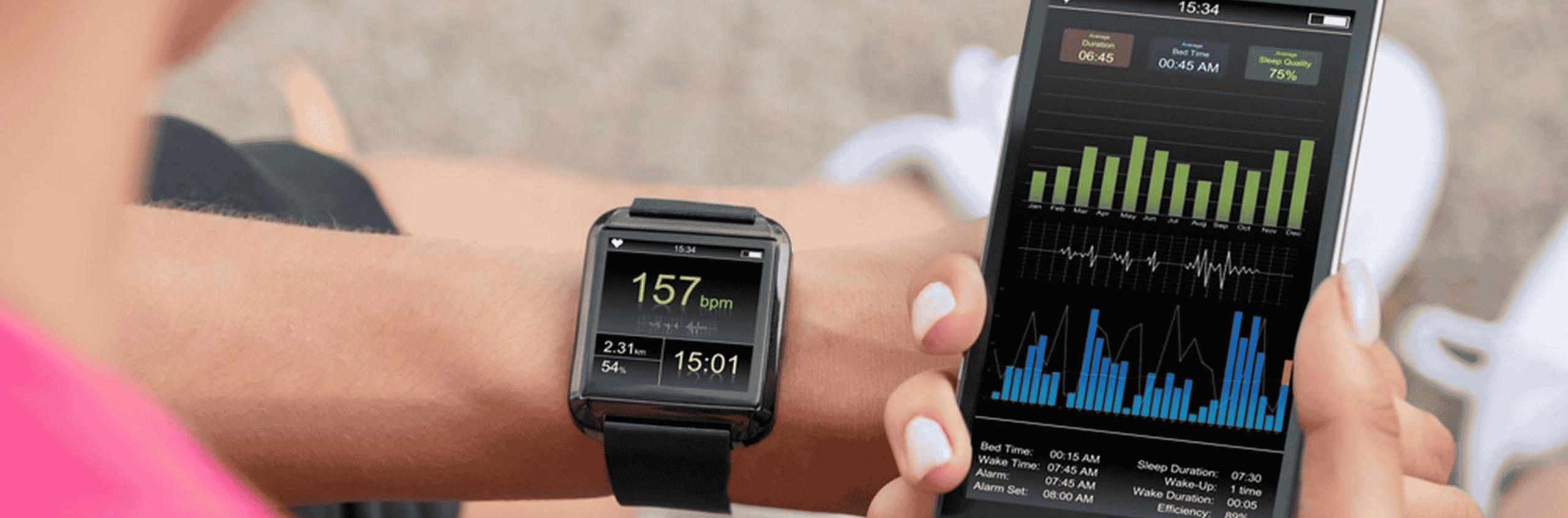
    Dr Lucy’s favourite wearable is the Fitbit Charge 3 which gives insight into daily activity, tracks heart rate and gives feedback on sleep quality all in one (https://www.fitbit.com/uk/charge3).

    Monitoring Heart Rate

    In addition to these parameters, we also know that heart rate variability, the beat to beat variation in heart-beat, can provide a direct indication of the body’s stress levels and activation of parasympathetic (rest and recovery) and sympathetic (flight and flight) nervous systems. Generally, the wider the variation in HRV the better and narrower HRV can be due to stress or under recovery. There are several ways to monitor this in which the optimum is on a continuous basis. A few of products that do this and give feedback on stress levels and sleep quality include:

    Oura ring (this is probably the best): The Ōura ring senses body temperature pulse heartrate variability and activity. It can give insights into sleep quality and recovery. Remarkably, that this data is gathered with a reasonably stylish rain. https://ouraring.com/.

    Whoop wristband: The Whoop wristband also get great feedback on resting heart rate body temperature pulse heartrate variability and activity. The manufacturers have also created an online community and podcast to help users optimize the experience. https://whoop.com/

    Garmin vivosmart: the Garmin watch allows users to facilitate the GPS tracking that Garmin devices are famous for as well as giving estimates of VO2 max https://buy.garmin.com/en-GB/GB/p/571520

    The idea of these devices is that they give you the requisite nudge to ensure that you take proactive measures to reduce stress and increase recovery on days when your heart rate variability is low and the feedback from the device suggests that stress levels are high.

    British Association of Sports and Exercise Medicine  ·  European Atherosclerosis Society  · 
    Independent Doctors Federation

    As seen in The Independent, The Daily Mail and Tatler

    For educational purposes. This article is written by a practising GP and is intended to inform, not replace a consultation with your own doctor. It does not constitute medical advice. A note on clinical guidelines: Coyne Medical is an independent private clinic. Our approach is guided by the best available evidence, tailored to each individual. This may go beyond standard NHS or NICE guidance, which is designed for population-level care and weighted by resource constraints.