
Tag: prostate cancer

  • The Future of Prostate Cancer Screening: How to Avoid an Unnecessary Biopsy

    The Future of Prostate Cancer Screening: How to Avoid an Unnecessary Biopsy

    Introduction: A Smarter Approach to Prostate Cancer Screening

    Prostate cancer screening has long relied on the prostate-specific antigen (PSA) test. This is a simple blood test used by doctors worldwide, including at our private GP surgery in Fulham. However, while PSA testing is widely available, it has its flaws. It can often lead to unnecessary biopsies and anxiety.

    Thankfully, advanced screening methods such as the Stockholm3 test (STHLM3) are revolutionising prostate cancer detection. the Stockholm3 might sound like a 90s Indie band. However, it offers higher accuracy and fewer unnecessary procedures in patients with elevated PSA.

    If you’re considering prostate cancer screening in London, here’s what you need to know about the latest innovations.

    The PSA Test: A Good but Imperfect Tool

    The PSA test measures prostate-specific antigen levels in the blood, helping detect potential prostate issues. However, elevated PSA levels don’t necessarily indicate cancer. Benign prostate enlargement, infections, or inflammation can also cause an increase.

    This low specificity often leads to unnecessary MRI scans and biopsies, causing undue stress for patients. At our Fulham GP clinic, we focus on providing cutting-edge screening options that minimise unnecessary interventions.

    Stockholm3 Test: A Game-Changer in Prostate Cancer Screening

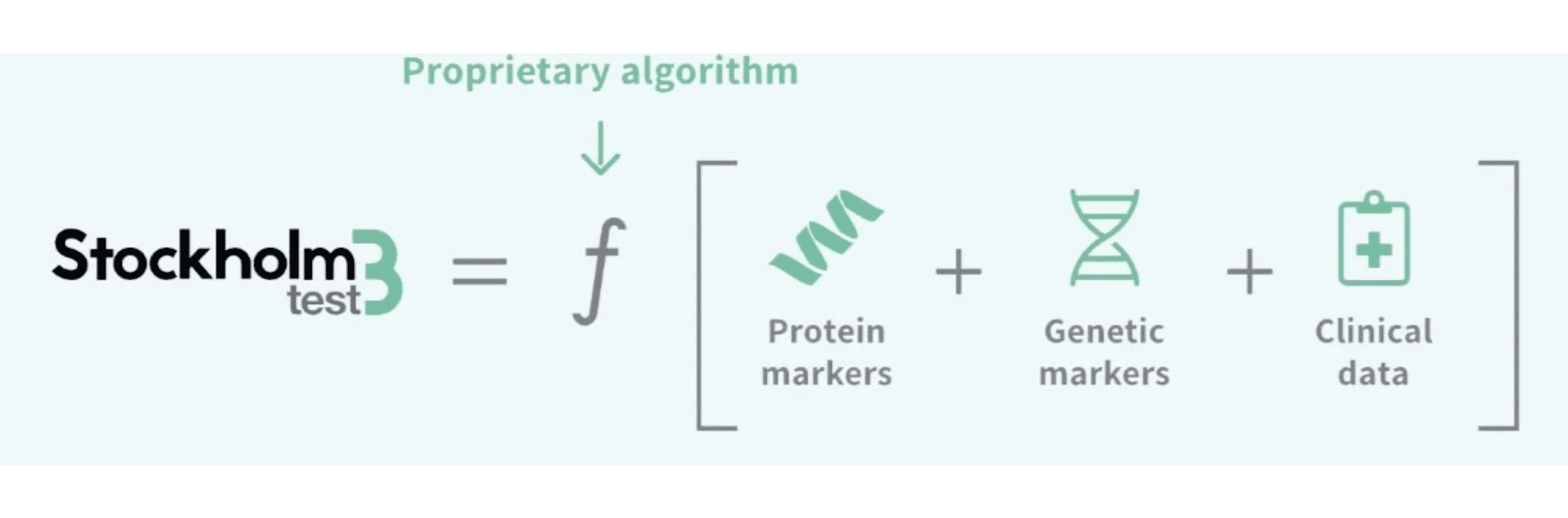
    The Stockholm3 test (STHLM3) is an innovative approach that combines:
    ✅ Biomarkers (blood-based indicators of prostate health)
    ✅ Genetic testing (to assess hereditary cancer risks)
    ✅ Clinical data (age, family history, and other risk factors)

    How Does Stockholm3 Improve Prostate Cancer Diagnosis?

    major study found that Stockholm3 reduced the need for prostate biopsies by 32% while maintaining high accuracy in detecting aggressive cancers.

    The National Institute for Health and Care Excellence (NICE) has also acknowledged Stockholm3’s potential to improve prostate cancer screening, helping reduce unnecessary MRI scans and biopsies.

    Reflex Testing: Enhancing PSA Results with Greater Accuracy

    At our Fulham private GP clinic, we understand the importance of precision in diagnostics. The Stockholm3 test acts as a reflex test, meaning:

    • If PSA levels are elevated, Stockholm3 analyzes additional risk factors to determine whether a biopsy is truly needed.
    • This prevents unnecessary biopsies while still identifying high-risk patients.

    By integrating Stockholm3 testing into our private GP services in London, we offer a more tailored, patient-friendly approach to prostate cancer screening.

    Stockholm3’s Global Success: A Reliable Test for All Ethnicities

    One concern with many prostate cancer screening tests is their effectiveness across different ethnic groups. The SEPTA trial, conducted in North America, confirmed that Stockholm3 is highly accurate across diverse populations, showing:

    • Better specificity (fewer false positives)
    • Non-inferior sensitivity (still detects all significant cancers)

    This is a crucial breakthrough, as ethnicity is a known risk factor for prostate cancer. At our private GP clinic in London, we strive to provide the best screening options for all patients.

    The Future of Prostate Cancer Screening in London

    Advancements like Stockholm3 represent a major step forward in prostate cancer detection. As we move toward a more personalised, risk-based approach, our clinic is committed to offering the most advanced screening technologies available.

    If you’re considering prostate cancer screening in Fulham, our expert private GPs provide:
    ✅ Comprehensive prostate health assessments
    ✅ Advanced genetic testing
    ✅ Cutting-edge screening methods

    Book a Prostate Cancer Screening with a Private GP in Fulham

    Early detection saves lives, but screening should be accurate and stress-free. At our London private GP surgery, we offer advanced prostate cancer screening that helps you avoid unnecessary biopsies while ensuring your health remains a top priority.

    🔹 Contact us today to book a prostate health consultation at our Fulham GP clinic.

    British Society for Genetic Medicine  ·  European Atherosclerosis Society  · 
    Independent Doctors Federation

    As seen in BBC, The Guardian, Women’s Health, The Times and Tatler

    For educational purposes. This article is written by a practising GP and is intended to inform, not replace a consultation with your own doctor. It does not constitute medical advice. A note on clinical guidelines: Coyne Medical is an independent private clinic. Our approach is guided by the best available evidence, tailored to each individual. This may go beyond standard NHS or NICE guidance, which is designed for population-level care and weighted by resource constraints.

  • Insights into Prostate Cancer Screening

    Insights into Prostate Cancer Screening

    The Subtle Art of Dodging a Biopsy Needle: Insights into Prostate Cancer Screening

    Imagine for a moment, a routine test that’s as easy as a light morning jog but as nerve-wracking as a Six Nations Grand Slam decider. That’s the prostate-specific antigen (PSA) test. For many, it’s a simple, non-invasive blood test. Yet, it’s shadowed by the anxiety of what might follow. It’s cheap, it’s easy, but with its low specificity, the real cost might be unnecessary worry and invasive follow-ups.

    The Science Behind PSA and its Limitations 

    PSA testing is a frontline defender in the battle against prostate cancer. Yet, its role has sparked as much debate as it has admiration. Why? Because elevated PSA levels don’t exclusively point to cancer. From benign prostate enlargement to prostate inflammation, several non-cancerous conditions can set that needle twitching. This leads to a cascade of often unnecessary biopsies. The result is overdiagnosed patients living with the label of a cancer that would have remained harmless.

    Innovations in Prostate Cancer Screening: The Stockholm3 Study 

    Enter the Stockholm3 (STHLM3) test, a sophisticated algorithm developed by Grönberg et al. The Stockhol3 sounds like the name of an Indie band. However, it could be likened to a finely tuned diagnostic orchestra. The exact opposite of the chaos you might encounter at your child’s assembly. This orchestra, however, is playing a symphony of biomarkers, genetic markers, and clinical data. It is designed to harmonise the detection of significant cancers while reducing the cacophony of unnecessary biopsies. The STHLM3 study showed a reduction in prostate biopsies by 32% compared to PSA testing alone, without missing a beat on detecting high-grade cancers.

    Diving Deeper: The Reflex Test and its Importance 

    The refinement doesn’t stop there. The STHLM3 serves as a reflex test in prostate cancer screening. As such it steps in when PSA levels rise to discern whether that rise truly suggests cancer. This selective approach ensures that only men at higher risk face the biopsy needle. This is a smarter, strategy that not only spares unnecessary pain but also cuts through the cloud of anxiety that hovers over many after a PSA test. The National Institute of Clinical Excellence carried out an innovation briefing on the Stockholm3. The briefing noted “that the technology has the potential to improve diagnostic accuracy leading to a reduction in unnecessary MRI and biopsies.” Prostate Cancer Research has asked that such tests become more widespread

    Global Validation and Ethnic Diversity 

    The STHLM3’s performed well in Sweden. However,  the question remained: How well does it perform on the world stage? The SEPTA trial aimed to answer just that, testing Stockholm3 across a variety of ethnic groups in North America. Sensitivity in medical testing refers to the ability of a test to correctly identify those with the disease (the true positive rate). In contrast, specificity measures a test’s ability to correctly identify those without the disease ( the true negative rate). The trial demonstrated non-inferior sensitivity and a significant boost in specificity. This suggests that Stockholm3 could reduce unnecessary biopsies across ethnically diverse populations without missing those cancers that truly threaten well-being. This is, of course, incredibly useful for us given that we are based in London with it’s immense ethnic diversity. 

    Looking Forward: The Impact of Stockholm3 on Prostate Cancer Screening 

    New technologies in medicine are being rapidly developed. We are on the cusp of a new era in medical diagnostics. The Stockholm3 model presents a beacon of hope. It promises a future where the fear of overdiagnosis is significantly diminished. It also offers a journey from prostate cancer screening to diagnosis that respects both the mental and physical sanctity of patients. It’s also a testament to how far we’ve come in understanding and managing prostate cancer. 

    Conclusion 

    In an era where medical technology leaps forward by bounds, the evolution of prostate cancer screening from PSA to Stockholm3 is not just about scientific achievement. It’s about managing the delicate balance between vigilance and quality of life. In medicine, we don’t always get that right. For those facing the spectre of prostate cancer, it offers a new narrative, one where the screening process is as thoughtful and refined as the care they deserve.

    Contact us at contact@coynemedical.com to book your Stockholm3 test.

    British Association of Sports and Exercise Medicine  ·  European Atherosclerosis Society  · 
    Independent Doctors Federation

    As seen in The Independent, The Daily Mail and Tatler

    For educational purposes. This article is written by a practising GP and is intended to inform, not replace a consultation with your own doctor. It does not constitute medical advice. A note on clinical guidelines: Coyne Medical is an independent private clinic. Our approach is guided by the best available evidence, tailored to each individual. This may go beyond standard NHS or NICE guidance, which is designed for population-level care and weighted by resource constraints.