
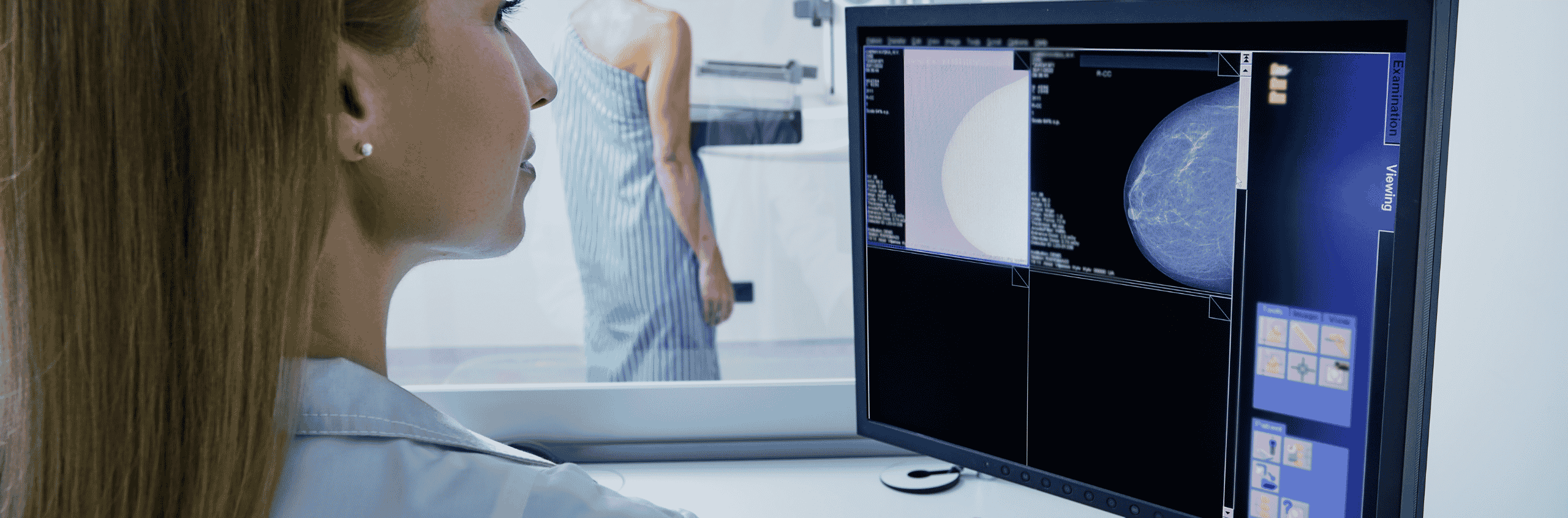
Breast cancer affects 1 in 7 women over their lifetime. But risk is not uniform, and early detection changes outcomes dramatically. This guide covers what raises your risk, what the latest screening tools can offer, and when genetic testing should be part of the picture
- What causes breast cancer?
- Family history and genetic risk
- Lifestyle risk factors
- Breast density
- Symptoms to know about
- Screening options
- Genetic testing for inherited risk
- Support and further information
What causes breast cancer?
No single thing causes breast cancer. For most women, it comes down to a mix of genetics, hormones, lifestyle, and chance. The good news is that many risk factors can be identified, and some can be changed.
Breast cancer is the most common cancer in UK women. Around 150 new cases are diagnosed every day. 1 in 7 women will be diagnosed with breast cancer during their lifetime. Survival has improved a lot in recent years, mainly because of better treatments and earlier diagnosis. Stage 1 breast cancer now has a five-year survival rate above 98%. That figure drops significantly when cancer is found later, which is why screening matters so much.
Family history and genetic risk
Family history
If your mother, sister, or daughter has had breast cancer, your own risk is roughly double the average. The risk is higher if they were diagnosed under 50, or if several relatives on the same side of the family have been affected. It is also worth knowing that breast cancer genes can be passed down through male relatives, who may carry a mutation without ever developing the disease themselves.
Inherited gene mutations
About 5% to 10% of breast cancers are caused by an inherited fault in a gene. The most well known are BRCA1 and BRCA2. Women with a BRCA1 mutation can have a lifetime breast cancer risk of up to 90%. Other genes, including PALB2, CHEK2, and ATM, also raise risk, though usually by a smaller amount. These gene faults do not cause cancer directly. What they do is make it harder for the body to repair DNA damage over time, which means errors in cells are more likely to build up into cancer.
Hormonal factors
Starting periods early or reaching menopause late both mean more years of oestrogen exposure, which is linked to a modest increase in breast cancer risk.
The relationship between HRT and breast cancer has caused a lot of confusion, but the evidence is now much clearer. Combined HRT, which includes both oestrogen and a synthetic progesterone, does carry a small real increase in risk. The estimate is around ten extra cases per 1,000 women taking it for up to 14 years from age 50. Body-identical progesterone (sometimes called Utrogestan or micronised progesterone) appears to carry much less risk, and current evidence suggests the increase may be close to zero in the first five years of use. Women who take oestrogen alone, because they have had a hysterectomy, are not thought to have any meaningful added breast cancer risk from HRT. If you are weighing up HRT and are worried about breast cancer, your GP should look at your full risk picture rather than giving a blanket answer.
Lifestyle risk factors
Alcohol
Even moderate drinking raises breast cancer risk. Around two units a day, roughly a single glass of wine, is linked to about a 9% increase in risk. That is a bigger rise than most people expect, and larger than the risk from combined HRT.
Weight and body fat
Being overweight after the menopause increases risk. Fat tissue produces oestrogen, and higher oestrogen levels after the menopause are linked to breast cancer. Weight carried around the middle is particularly important. Visceral fat, the fat stored around your internal organs, is more hormonally active than fat under the skin, and more directly linked to cancer risk. This is why knowing your body composition, not just your weight, matters.
Exercise
Regular exercise reduces risk. Brisk walking for 30 minutes, five days a week, can lower breast cancer risk by up to 12%.
Smoking
Current smokers have around a 10% higher risk compared to people who have never smoked.
Having children and breastfeeding
Women who have had children have a lower overall risk than those who have not. Breastfeeding adds further protection, probably because it delays the return of periods.
Previous radiotherapy
If you have had radiotherapy to your chest, for example for lymphoma, this raises your breast cancer risk. Let your GP know so they can factor it into your screening plan.
Breast density
Breast density is one of the less talked about risk factors, even though it affects up to half of women over 40.
Dense breast tissue means your breasts contain more fibrous and glandular tissue relative to fat. This matters for two reasons. First, women with the highest density category have roughly double the breast cancer risk of women with mostly fatty breast tissue. Second, dense tissue and potential cancers both appear white on a mammogram, which means dense breasts can hide problems that mammography might otherwise catch.
Breast density can only be seen on a mammogram. It has nothing to do with how your breasts feel. We have written a dedicated guide that covers what dense breasts mean for your screening choices and what options are available at Coyne Medical.
Symptoms to know about
Most breast cancers are found through screening before any symptoms appear. But it is still important to know what to look out for. See a GP promptly if you notice any of the following. None of these automatically means cancer, but all of them should be checked.
A lump or swelling in the breast, upper chest, or armpit. A change to the skin, such as puckering or dimpling. Redness or a change in colour of the breast. A nipple that has become newly inverted or changed shape. A rash or crusting around the nipple. Unusual discharge from either nipple. A change in the size or shape of the breast that you cannot explain.
Screening options
NHS mammography
The NHS invites women aged 50 to 71 for a mammogram every three years. Mammography uses low-dose X-rays and can detect cancers before they are large enough to feel. If you think you may have missed an invitation, you can find your nearest NHS breast screening centre online and self-refer. Women identified as higher risk through family history may be offered NHS screening from age 40 instead.
Why starting earlier makes sense
The UK starts breast screening later than most comparable countries. There is strong evidence that annual mammography from age 40 can reduce the risk of dying from breast cancer by around 25% over ten years. At Coyne Medical, annual mammography from 40 is included as standard in our Complete and Ultimate health screening packages. Mammograms are mildly uncomfortable but only take a few minutes. Modern machines use a very low radiation dose, similar to about seven weeks of natural background radiation.
Breast ultrasound
Ultrasound uses sound waves rather than radiation and is particularly useful for women with dense breasts. It can find cancers that mammography misses, and it can tell the difference between solid lumps and fluid-filled cysts. At Coyne Medical, breast ultrasounds are carried out by Dr Neil Upadhyay, a Consultant Radiologist at Imperial College Healthcare NHS Trust with specialist expertise in breast imaging.
Breast MRI
MRI is the most sensitive test available for breast cancer detection. It is recommended for women at high risk, such as those with a confirmed BRCA1 or BRCA2 mutation, or women who have had radiotherapy to the chest. The European Society of Breast Imaging also recommends MRI for women with dense breasts who have additional risk factors, such as a significant family history. It is not used for general population screening because of cost and a higher rate of false alarms, but for the right patient it offers much greater sensitivity than mammography alone. If you have dense breasts and other risk factors, speak to your GP about whether MRI is appropriate for you.
Multi-Cancer Early Detection: TruCheck
TruCheck is a blood test that looks for tumour cells that have broken off from a cancer and entered the bloodstream, before any symptoms have appeared. It screens for over 70 types of cancer from a single blood draw.
The evidence for breast cancer detection is particularly strong. In a 2022 study by Crook et al., published in the journal Cancers, the test correctly identified breast cancer with a sensitivity of over 92% across a population of more than 9,000 participants. A follow-up clinical study found similar results.
TruCheck Multicancer Early Detection Blood test is generally suitable for people aged 40 and over who have not previously been diagnosed with cancer. People aged 35 to 39 with a strong family history or a known gene mutation can also be considered. It is not a replacement for imaging but adds an extra layer of detection.
Multi-Cancer Early Detection →
Genetic testing for inherited risk
Genetic testing used to be offered only to people with a clear family history of cancer. But research now shows this approach misses nearly half of people who carry a high-risk mutation. Mutations can run through male relatives who never develop breast cancer. Relatives may have died young before any cancer appeared. Families may simply be small, with no obvious pattern to notice.
At Coyne Medical, we offer genetic testing to everyone, not just those who meet a high-risk threshold. We know fewer than 5% of people in the UK with a high-risk mutation have been identified. We want to help you find any inherited risk early.
Who should particularly consider it
A personal or family history of breast or ovarian cancer, especially under age 50. Several affected relatives on the same side of the family. Male relatives with breast, prostate, or pancreatic cancer. Ashkenazi Jewish heritage, which carries a higher rate of BRCA1 and BRCA2 mutations in the population. A known mutation in the family. If any of these factors apply to you, it is worth finding out.
What a positive result means
A positive result does not mean you will get cancer. What it does is change what screening makes sense for you, and opens the door to options that could significantly reduce your risk. Women with a BRCA1 mutation, for example, are offered annual mammography and MRI by the NHS from age 30, and may be candidates for medication or surgery that can cut breast cancer risk by over 95%.
What a negative result means
No harmful mutations were found in the tested genes. This is genuinely reassuring. It does not eliminate all breast cancer risk, particularly if you have a strong family history, but it is meaningful information. You should still continue appropriate screening based on your other risk factors.
What about male relatives?
Half of people who carry a BRCA1 or BRCA2 mutation are male. Men with these mutations have a raised risk of prostate cancer, male breast cancer, and pancreatic cancer. A man with a BRCA2 mutation has up to a 60% lifetime risk of prostate cancer, more than eight times the population average. Male relatives in families affected by breast or ovarian cancer should consider testing too.
At Coyne Medical we offer an inherited cancer risk panel covering 35 genes, available as an at-home saliva test from £650 or an in-clinic blood test from £900. Our Advanced Genetic Screen covers 55 genes and also includes a pharmacogenomics report. Genetic testing is included as standard in our Ultimate health screening package.
Support and further information
If you have concerns about your breast cancer risk or about inherited breast cancer in your family, the following organisations can help. The National Hereditary Breast Cancer Helpline offers support for people at risk of hereditary breast cancer. Breast Cancer Now is a leading UK charity with information and a clinical nurse helpline. Jnetics focuses specifically on prevention and diagnosis in the Jewish community. Peer support groups for people with BRCA and other gene mutations are also available online and can be a valuable source of connection alongside clinical advice.
Explore our other Health Guides
Cardiovascular Health · Cancer · Longevity and Healthspan · Child Health · Men’s Health · Women’s Health · Nutrition and Lifestyle · Lab Tests and Results